No reason to stay
Players had no layer of ownership, aspiration, or long-term value beyond the next match. Gameplay excitement was strong. Attachment, identity, and return value were weak.

1v1.LOL
Adding a Champions layer — identity, progression, and monetization — to a 900K DAU competitive game without losing the speed that made it work.
Product footprint
The challenge
1v1.LOL had a strong core match loop, but not enough around it to support longer-term identity, excitement, or monetization. At its core, the game already had something valuable: a fast match loop with immediate gameplay. What it lacked was a stronger layer around that loop — a reason for players to build attachment, express identity, progress over time, and return for more than the next match.
That made the challenge bigger than onboarding or UI cleanup. The real question was how to turn a strong game loop into a stronger product.
Players had no layer of ownership, aspiration, or long-term value beyond the next match. Gameplay excitement was strong. Attachment, identity, and return value were weak.
The product lacked a clear second layer. There was no system to support deeper expression, meaningful progression, or monetization that felt native to the experience.
Adding too much around the game could weaken its immediacy — the core thing that made it work. The opportunity was building depth without adding heaviness.
Reframing the product
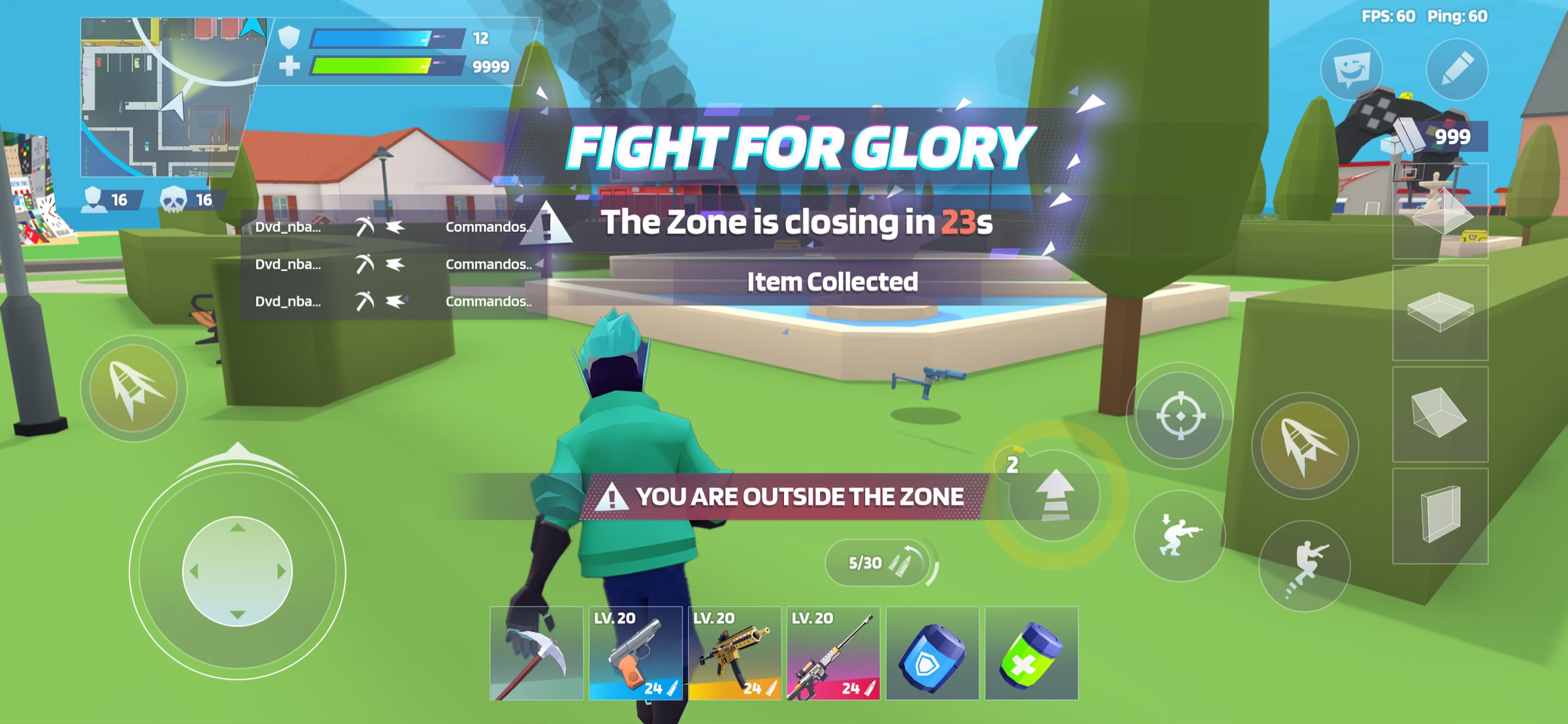
The game already delivered action. What it did not yet deliver strongly enough was a broader sense of ownership, aspiration, and long-term value. That shifted the direction of the work.
Instead of asking how to improve isolated flows, I focused on how to create a new layer that could connect gameplay, identity, progression, and business growth inside one coherent product system. That became the foundation for the Champions concept.
The key decision
The default framing
Improve the experience around the match — better onboarding, cleaner UI, smoother flows. Optimise what's already there.
The reframe
Add a structural product layer — Champions — that connects identity, progression, and monetization. Don't improve the game. Give players a stronger reason to care about it.
That changed the question from "How do we improve the experience around the match?" to "How do we make the product deeper, more expressive, and more expandable?" — and unlocked gameplay variation, player expression, weapon loadouts, progression, and native monetization as one connected system.
In play

Design moves
The Champions concept needed to feel like more than a feature layer. It had to give players a stronger sense of character, expression, and ownership inside the product. That meant designing Champions not only as gameplay differentiators, but as anchors for player identity — easier to care about emotionally, not just mechanically.
This work went beyond one feature. I helped redesign the surrounding screens and flows so champion selection, progression, and loadout decisions felt like part of the product rather than add-ons around the match. The product needed to communicate that this was a meaningful layer of play, not a disconnected menu system.
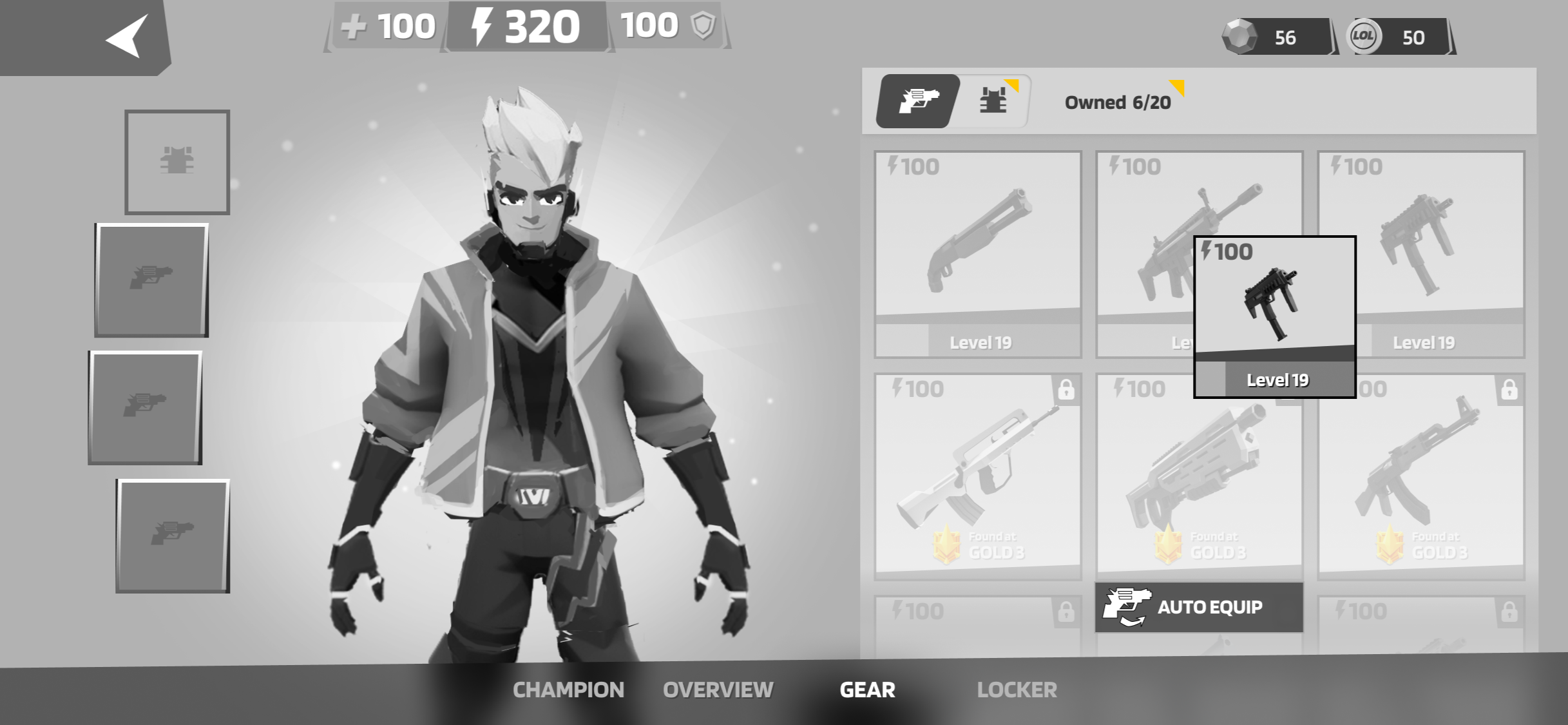
Abilities and weapon loadouts were designed to make the experience feel more dynamic and strategic, while staying readable for players in a fast game context. The goal was not complexity for its own sake — it was to create more room for mastery, preference, and anticipation without overloading the experience.
Skins, characters, and monetization layers were not treated as separate business mechanics. They were designed as part of the same system of identity, progression, and excitement — making monetization feel more natural to the product direction and more connected to what players actually value.
Loadout
Outcome
The result was not only a new concept. It was a stronger product direction. Instead of relying only on the core match loop, 1v1.LOL gained more room for player identity, progression, and content expansion. The Champions layer created a clearer foundation for deeper player attachment, stronger reasons to return, more expressive gameplay choices, and monetization opportunities that belonged inside the product.
The value of the work was not just adding content — it was creating a more expandable system around the game. In games, some of the strongest growth opportunities come from expanding why players care, not only from improving what they already do.
Reflection
Product depth needs structure. Adding excitement is not enough on its own. New gameplay layers need clear product logic around identity, progression, and choice. Without that structure, depth feels like noise rather than value.
Monetization works better when it belongs. The most sustainable monetization layers are the ones that feel native to the player experience, not bolted on after the fact. When players feel like they are buying something that is part of the game's logic — not a tax on it — conversion and satisfaction improve together.
Games are products, not just gameplay loops. The strongest growth opportunities come from expanding why players care — not only from improving what they already do. This project reinforced that view and shaped how I think about engagement design across product types.
This case study shows how I think about games as products, not only as gameplay loops. It reflects the way I connect UX, progression, identity, and monetization into one broader product direction — and how I look for growth opportunities that improve both player value and business potential.