Senior Product Designer · 2021–2022 · Copilot.cx
First designer in. Built the foundation. Stepped back.
Build the system before the screens.
- My role
- Senior Product Designer
- Flows
- 5
- Mentored
- 2 juniors
The stakes
Working technology. No design practice. Two juniors about to join.
Copilot.cx is the marketing platform Tzumi, C+A Global, and TempDrop use after a device leaves the shelf. Vendors had designed the product. It did not reflect how a marketing manager thinks. Email tools are built around contact lists. CRMs are built around pipelines. Neither maps to IoT, where a user is also a physical device, and engagement includes firmware events. The platform had to define its own language. The two juniors about to join had no component library, no handoff process, and no Figma product experience.
The key decision
Foundation before speed.
The pressure was to ship screens. The VP had requirements. Screens without a foundation meant those two designers would inherit inconsistency and rebuild it later. I built the Figma component library first, mapped one-to-one to Ant Design, the front-end library engineering already used. The juniors learned inside that system.
Four questions, then the tools
-
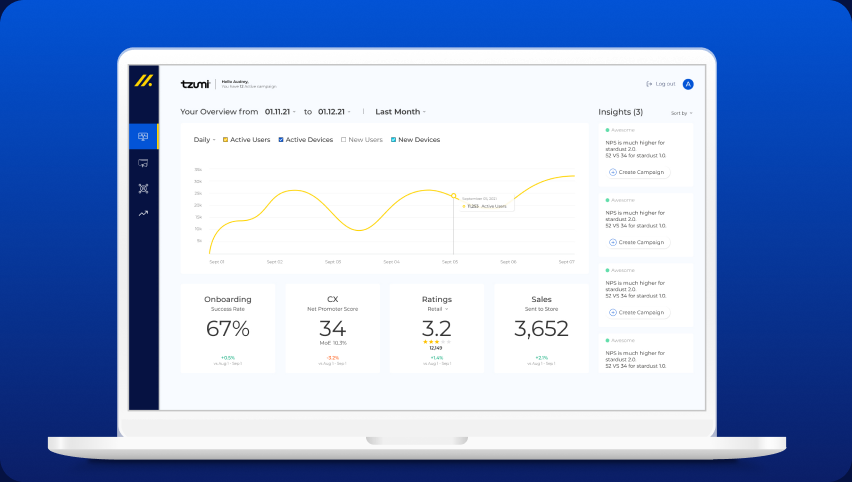
Dashboard
Marketing managers open a platform with a question. The overview answers four on one screen: who is active? How satisfied are they? What is running? What should I do next?
-
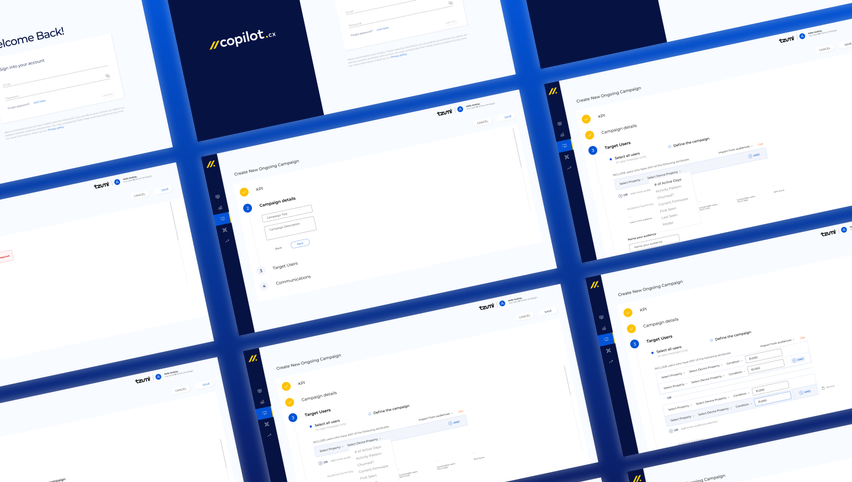
Campaigns
The builder is a guided sequence. Each step adapts to the choice before it, so the path stays short.
-
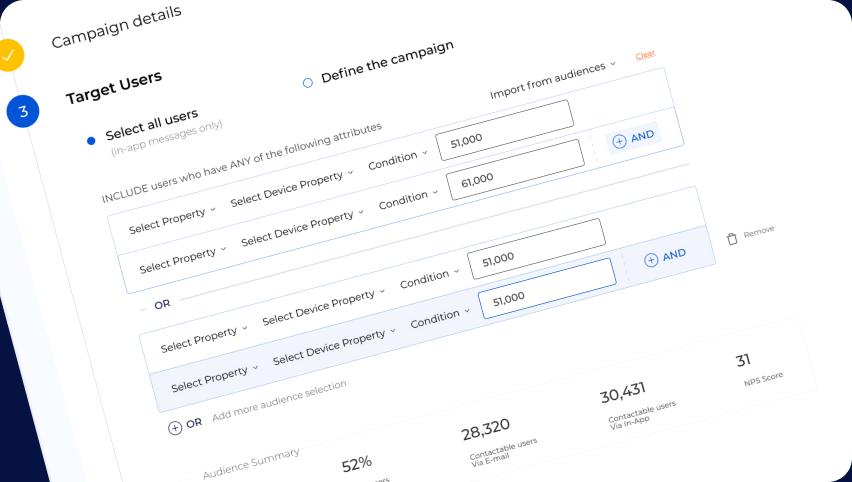
Segmentation
Include and exclude rows, in plain language, with a live audience count before anything is sent.
-
Canvas
The canvas closes the loop from the insight on the dashboard to the content that goes out.
One day a week, then three, then none
I started at one day a week, then three, then none. I onboarded the two junior designers into component-based design. I ran the early handoffs with engineering to set the pattern. I showed them how the four questions extend to a new feature, and how a data view connects to an action. When the foundation held, I stepped back.
Outcome
- Flows shipped
- 5
- Juniors shipping
- 2
- Library
- 1:1 Ant Design
Dashboard, campaigns, builder, segmentation, and canvas shipped. Two juniors were delivering on their own. On a contract this short, what held up after I left is the result that counts.
What stayed with me
I built the component library before the screens, on the same components engineering already used. A handoff was a component name in Figma.
The two juniors learned to build inside that library. When it held, I stepped back. The next designer has to add a flow without starting the library over.