Web & Product Design · 2010–2016 · Bank Hapoalim
Search had to work the way people at the bank already talked.
I was the only designer. Thirteen interviews, a survey of 752, then search built from the words people already used.
- My role
- Web & Product Design
- Employees
- 10,000+
- Outcome
- −34% Tickets
The stakes
10,000 employees. Millions of clicks. Zero tolerance for broken habits.
Staff used the portal every single day. Rebuilding a system with that level of ingrained muscle memory meant we could not guess. Every change had to fix a real, measured pain.
The key decision
The search had to adopt the bank’s internal slang.
We mapped the people who use the web portal every day, as part of the day job. I met them at branch desks, in meeting rooms, and at coffee spots. Someone from product, and an outside consultant, sat in the interviews.
- Interviews and the survey. I ran thirteen interviews and surveyed 752 employees. Every one of the nine people in the first interviews found a tool they did not know the portal had. Only one of the nine could tell My Apps from My Favorites.
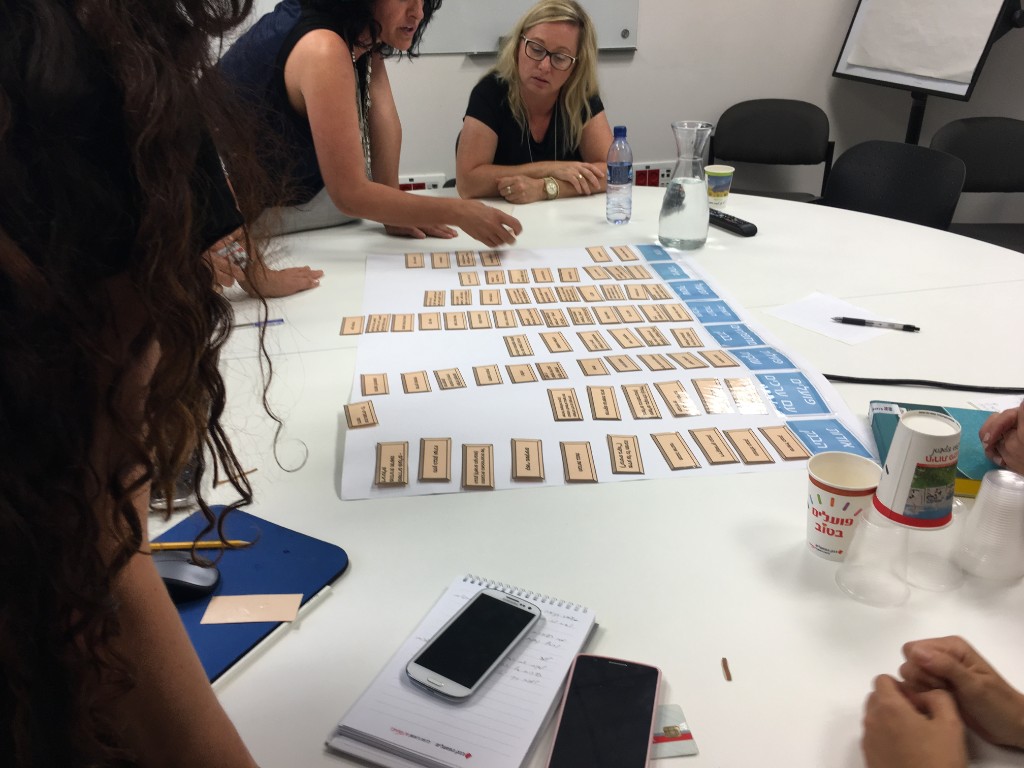
- Card sorting. I led three sessions. The cards were the categories. Those sessions set the menu and the names of the categories and the pages. They showed the duplicate pages, the nicknames, and the acronyms.
- Search rules. A typo, a hyphen, or an acronym with quotation marks had to return the same page. מש״אב and משאב had to bring up the same page.



What the research showed
They asked the person at the next desk.
Search failed on a hyphen in Ramat HaSharon. One of them said, “Google does forgive mistakes. It understands the words even when the spelling is wrong.”
From multiple search categories to one
Bankers had to choose a search category before they could look. I put pages, people, and tools into one search bar on the web.
The full search stayed on the desktop, for a document, a policy, or a person with a customer in front of them. Suggestions appear as someone types, so staff can pick the page without guessing the spelling. They asked which alerts to get: the role, a compliance note, or their own benefits.
I tested the results in a row: a unit, a person, and a document. A smaller screen could not hold that row, so I stacked them. The matching people, their extensions, and the tools sit with the documents. Staff had looked up a colleague in chat, and they can reach that person without leaving the search. A rating sits on every results page, so a bad answer can be flagged.
The phone did a smaller job. Away from the desk, staff used it for attendance, their own benefits, and the phone book.


The phone book opens over the page, so a person and a policy stay inside the search.


The phone. Employee info, today’s news and the day’s actions, benefits, the feed, and advice.
Navigating change
Employees were used to a homepage packed with hundreds of static links.
When we replaced that clutter with a single search bar, they panicked about losing their familiar shortcuts. “In the previous version, all the links were in front of our eyes. Now we have to search… What’s the benefit?” I did not put the clutter back. Instead, we tuned search logic to catch typos, missing hyphens, and internal slang. Partnering with internal communications, we launched videos and “You Asked, You Got!” posters showing how to finish daily tasks in three seconds.
Outcome
- Daily search
- 88%
- Opened from search
- 80%
- Support tickets
- −34%
The 88% and the 80% come from the portal counts and the surveys after launch. Michal, the department manager, presented the work at UXI Live, on how to design search for the bank’s employees.
What stayed with me
This was the first UX project I took from the interviews to the live product. The portal and the phone app were both about to change for 10,000 people. I had to know the solution was right before it went out. I did not run a lab. I met people at a branch desk, in a meeting room, or at a coffee spot, and I put a working screen in their hands during the workday.
Watching them there showed me how they already thought the portal worked. I left a rating, and their words, on the results, so the next person could fix a bad answer without a new design.