Product Design Lead · 2016–2018 · Airobotics
I learned a complex product with many business needs, and built a long-term experience and a design system developers could build from.
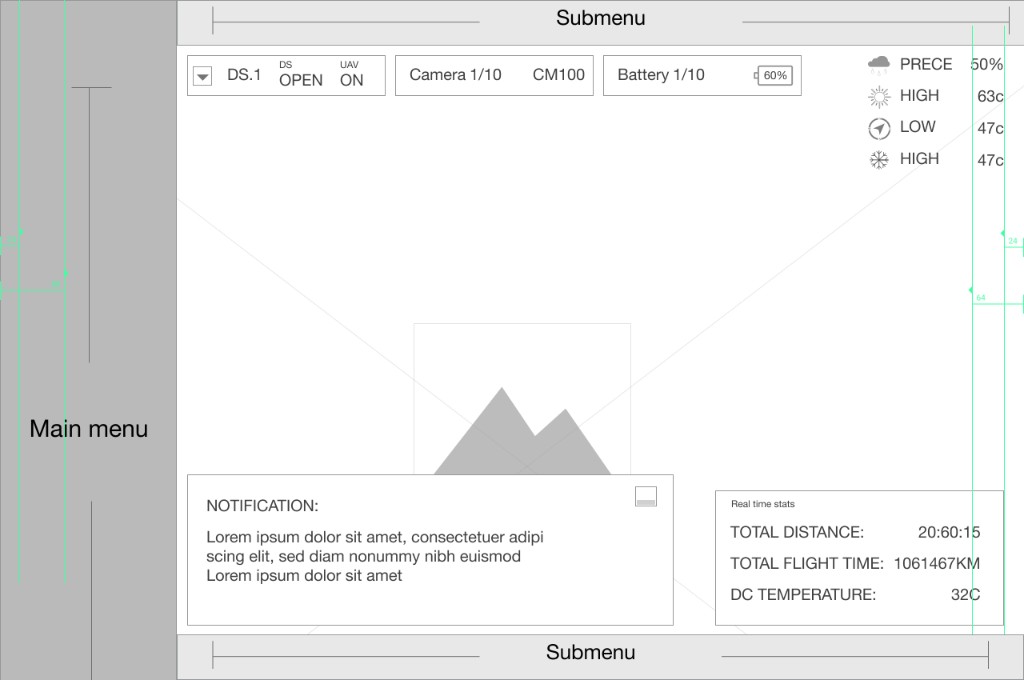
I led the exploration with the Head of Software, and we tried more than one solution. The layout had to stay familiar on a Windows workstation, a field tablet, a browser, and a phone. The same actions stayed in the same place.
- My role
- Product Design Lead
- Platforms
- 4
- Impacted
- Design system
The stakes
Building too early would make every later change expensive.
Airobotics had to deliver quickly. The vision for the software was not clear. The navigation had to hold different functions, and the product had to stay modular, with a consistent design. If we implemented before that was settled, every future change would be expensive.
The key decision
I set the navigation and the design system before we implemented.
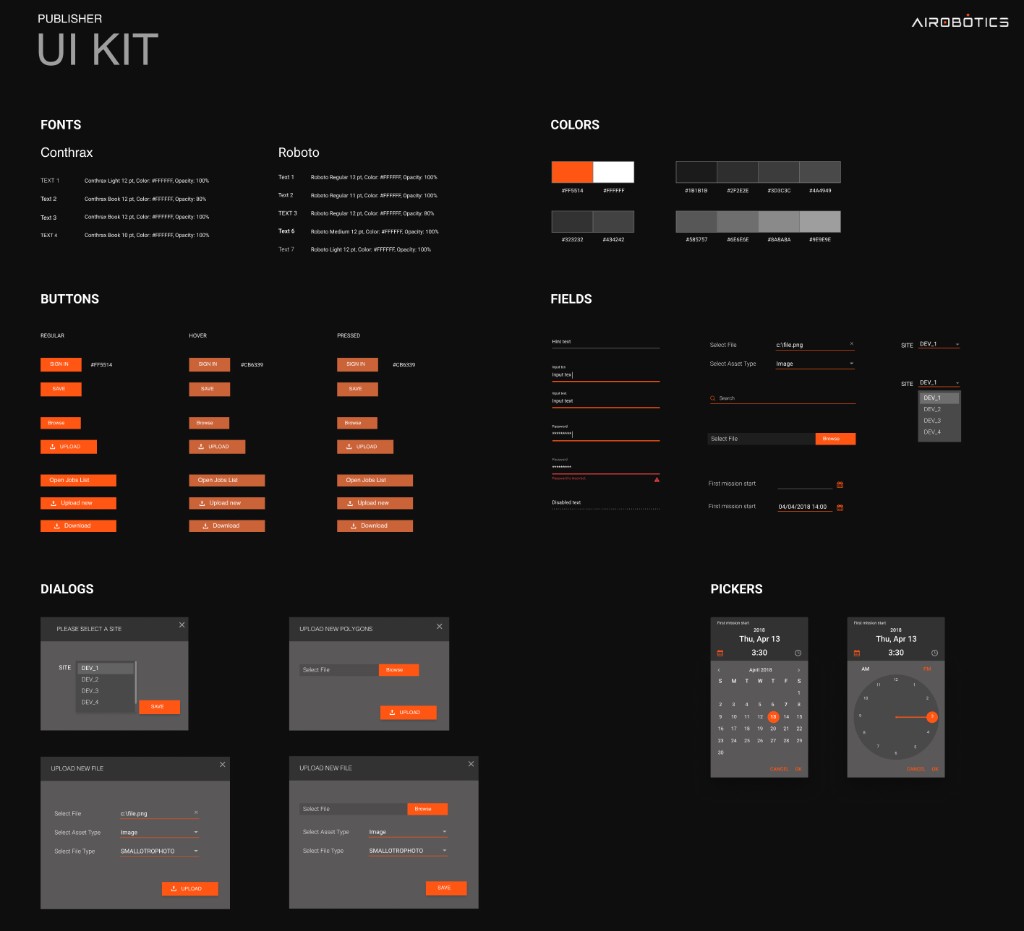
A new function had to fit into the navigation and into a consistent UI component library. I looked through design system libraries and chose Google's Material Design. It was an industry standard for usability and functionality, so we could stay flexible on a Windows workstation, a field tablet, a browser, and a phone. I moved the files from Photoshop to Adobe XD, so developers could build from those components.
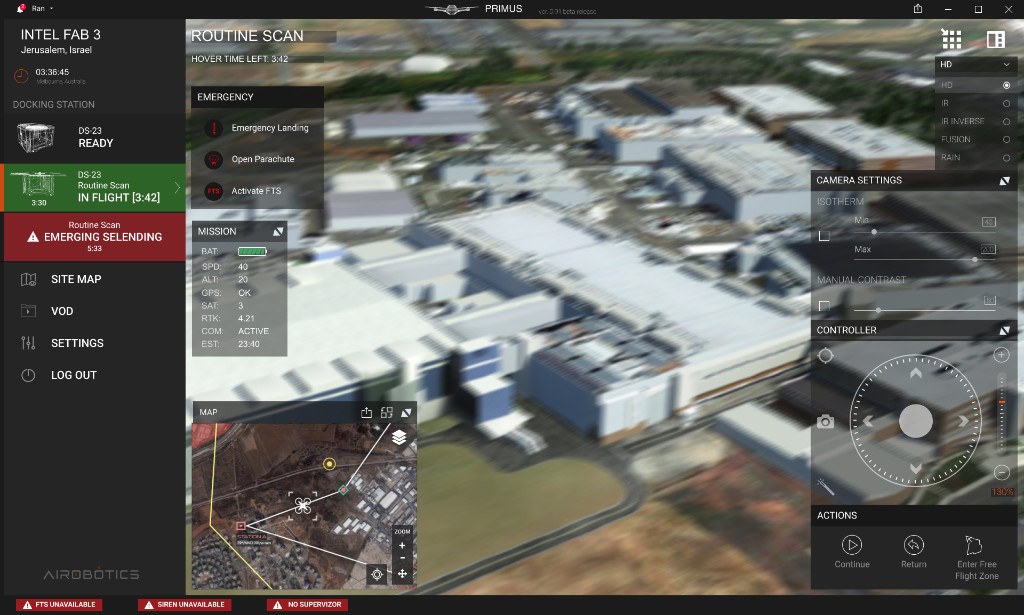
PRIMUS was designed to work on a Windows workstation, a field tablet, a browser, and a phone.
The layout was adaptive, so the same screen could support all of them. Components could also be detached, dragged to another screen, and maximized. Start, abort, and switch drone stayed one action away.
Landing, the parachute, and ending the flight sat in that same layout. Each had its own confirmation, because a mistake does not cost the same every time. The operator still had to be able to act.
Insightful was the data hub for how a site progressed over time.
Site managers tracked the week. Engineers could open any one flight and see the detail.
Charts showed total flights, duration, the mission mix, and the range report. Stockpile volume sat as bars and as a trend, so a site manager could compare one week with the week before. A map gallery, 4K photos, and VOD of the flight recordings were in one place.


Outcome
- Products
- 2
- Design practice
- 1 → 3
- Surfaces
- 4
Two platforms in production, serving operations in Israel, Chile, Australia, and the USA. The design practice grew from one designer to three. Airobotics was acquired by ONDAS Holdings in 2022.
What stayed with me
I put the components, the handoff, and the documentation in the working files. The next developer could build a screen without guessing.
An operator had to learn emergency landing, the parachute, and flight termination, and find them again when the device changed. The next designer has to be able to add a screen without making the operator relearn the product.